
Helping Elmwood Park Residents Plant Native Gardens
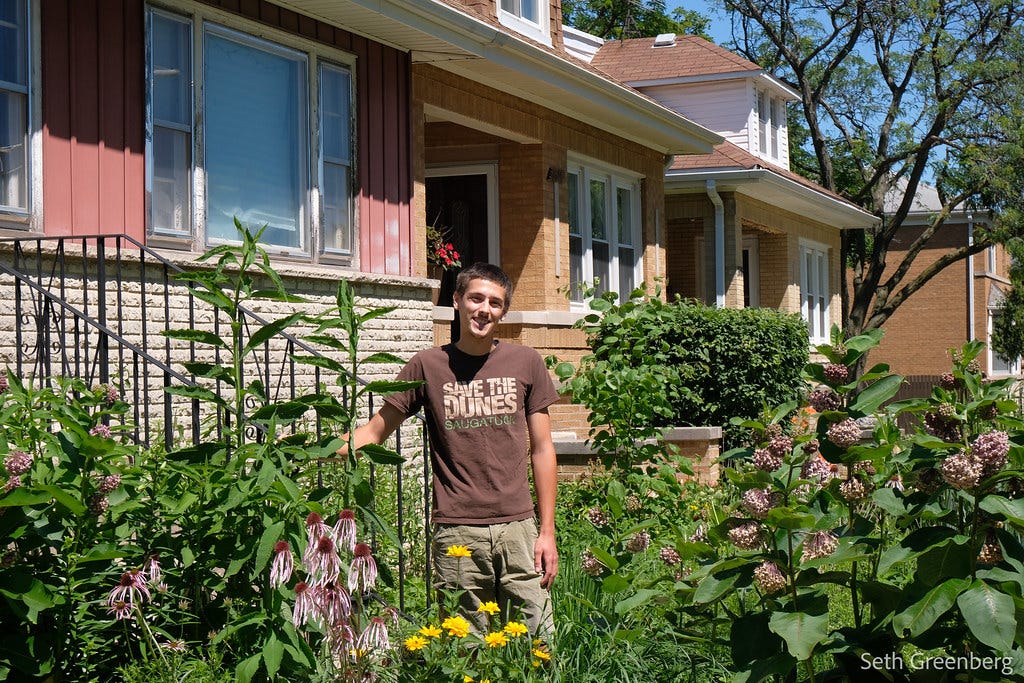
Elmwood Park resident Nick Wallace, a founder of Pocket Prairie Natives, helps fellow residents landscape their yards with plants native to the Midwest.

By Sara Lindsay, Deputy Editor
Walk past Nick Wallace’s front yard and you might notice something different. While many suburban yards are dominated by neatly trimmed turf grass, Wallace has transformed much of his landscape into a thriving ecosystem. Native wildflowers bloom throughout the growing season, butterflies drift between blossoms and bees hum overhead. Every plant has a purpose.
Wallace is the founder of Pocket Prairie Natives, a backyard native plant nursery in Elmwood Park dedicated to helping residents replace small pieces of traditional landscaping with plants that have naturally evolved in the Midwest.
His goal is to make native gardening simple for everyone. As Wallace says, “You don’t have to rip out your entire lawn. Even if it’s one plant or if it’s 500 plants, as long as you are actually planting native plants, you are helping.”
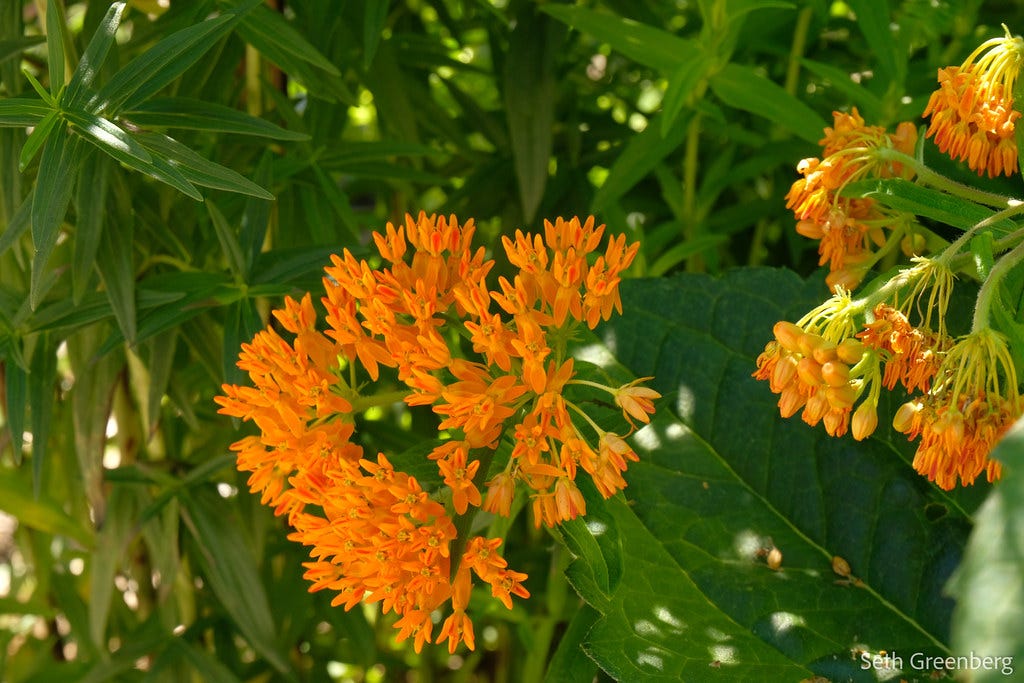
Wallace grows dozens of native species, including familiar wildflowers such as purple coneflower, butterfly milkweed, black-eyed Susan, wild bergamot and smooth blue aster, as well as native prairie grasses like little bluestem, big bluestem and Indian grass. He also grows native trees including Eastern redbud, honey locust, and black cherry.
“People tend to have this idea that native plants are going to look weedy or aren’t as pretty,” Wallace said. “That’s just simply not the case.”
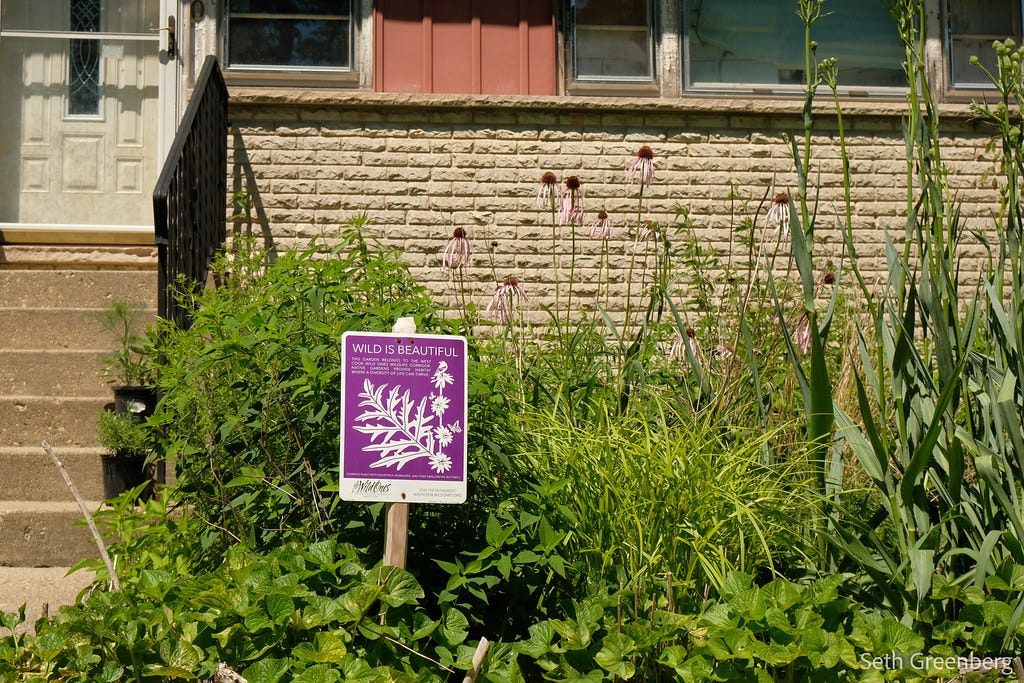
A traditional turf lawn is kept closely mowed and often maintained with fertilizers, herbicides, and pesticides. It offers relatively little habitat for insects and other wildlife. That’s why Wallace describes it as “a biological desert.”
Native gardens, however, support pollinators, birds, and beneficial insects while requiring less watering and maintenance once established. It rebuilds a habitat that has largely disappeared across Illinois.
“Did you know less than one percent of Illinois’ original prairie remains?” he said, noting that native ecosystems have steadily disappeared over the past two centuries as land was developed and converted for agriculture and neighborhoods.
That loss, Wallace contends, has consequences far beyond the plants themselves. Without native plants, many insects lose the habitat and food sources they need to survive—creating ripple effects throughout the ecosystem.
Native plants support insects that have evolved alongside them for thousands of years, and those insects in turn feed birds and other wildlife. Milkweed, for example, is the only plant monarch butterflies use to lay their eggs, making it essential to their life cycle.
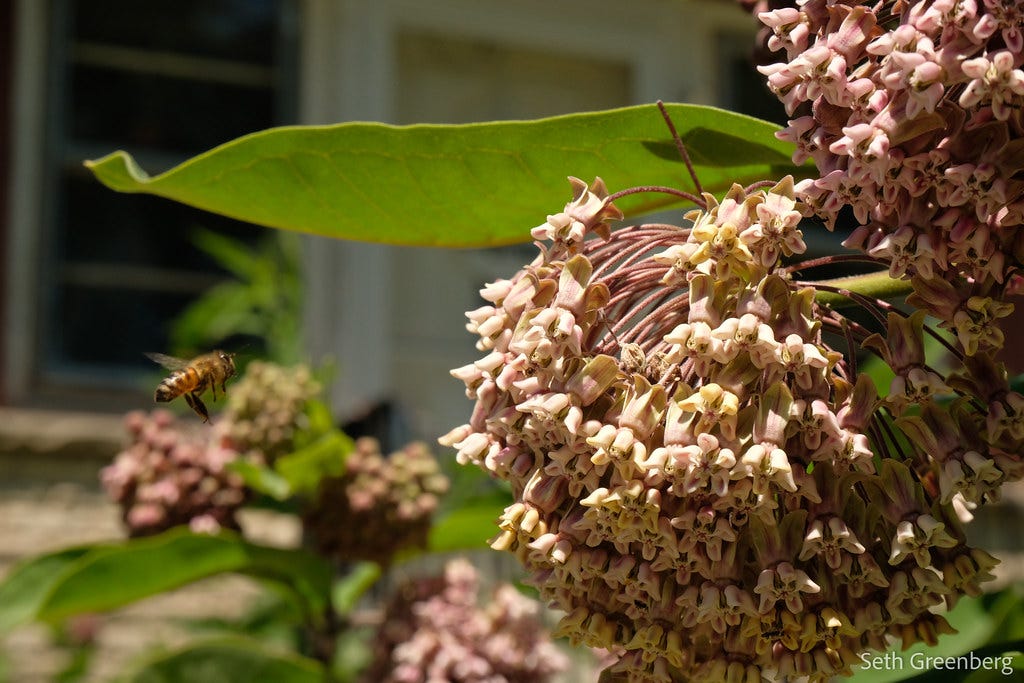
“A bird doesn’t go to a bird feeder and come back and feed its babies seed,” Wallace explains. “It only feeds its babies insects.”
He describes native plants as “living infrastructure.” Unlike many ornamental plants commonly sold at big box stores, native plants provide food and habitat throughout the food web while often requiring less maintenance once established.
In addition to supporting wildlife, native plants can help absorb stormwater, reduce erosion, cool neighborhoods during hot weather, and generally require less watering because they evolved in the Midwest’s climate.
For homeowners interested in getting started, Wallace recommends beginning with observation rather than shopping. “I would start with assessing the site,” he suggests. “How much sun does it get? Is the soil wet or dry? What’s already growing there?”
Homeowners may then research which native species match those conditions. According to Wallace, there are several free online resources that may help people identify plants native to their county or zip code, and he encourages people to not feel overwhelmed.
Native gardening does not necessarily mean replacing an entire yard. A single flower bed, a corner of the landscape, or even containers planted with native species may provide benefits for pollinators and birds.
Most importantly, Wallace hopes native gardening encourages people to see their neighborhoods differently.
“Part of the reason planting native is great is because you’re actually learning about the landscape you inhabit,” he adds. “Learn what inhabits the world around you.”
Through Pocket Prairie Natives, Wallace hopes to make that first step easier by growing native plants locally and sharing what he has learned with others interested in creating healthier, more resilient landscapes.
You can find Nick Wallace and Pocket Prairie Natives on Facebook.
The culture in Elmwood Park seems heavily into chemically-treated lawns and manicured shrubs. I would love to see this shift over time. There was a glimmer of hope when the village installed a native rain garden at 73rd Ave and Bloomingdale, but it seems that it was a failed project that is currently overrun with turf grass. I would be very curious to know what happened there and whether there are plans to revive it.
Nick is incredibly knowledgeable about the prairie ecosystem. The village could benefit from learning from him and save the Village of Elmwood Park some money in plant and garden maintenance, improve our ecosystem and beautify the community. Glad to see Nick is being featured.