
Library Program Data Does Not Show That Evening Hours Should Be Cut

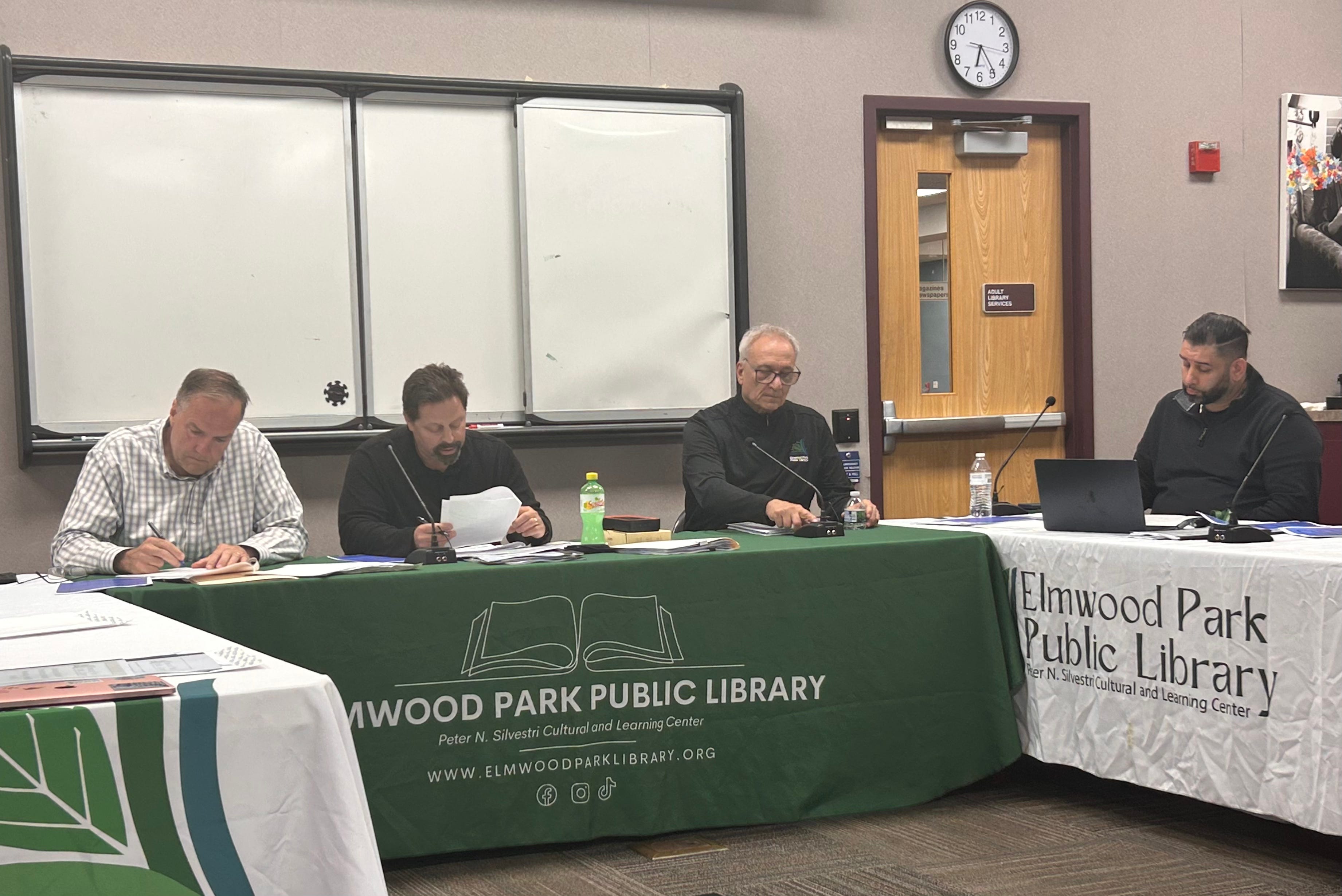
[Editor’s Note: Elmwood Park Advocate Editor Kevin Gosztola has openly opposed the library’s proposal to cut library hours, arguing that it is unnecessary. Also, the library released programming data but did not provide data on “patron demand” when responding to a records request from the Elmwood Park Advocate. That data on library use was finally shared after cutting weekday hours on May 11.]
By Kevin Gosztola, Editor
Elmwood Park Public Library Director Michael Consiglio claimed that data he compiled would show that the library should cut evening hours on weekdays. However, the data, which the Elmwood Park Advocate obtained, only accounts for residents who attend library programs.
The library does not count the number of residents who use the library because it is a quiet space for work or studying. The number of people browsing and reading books, newspapers, magazines, or using other resources and services is also unknown. Plus, oddly, this data does not include checkout data.
On May 11, the library board will vote on cuts to weekday hours. The agenda claims that the “adjustment” will reflect “actual patron usage patterns,” support “more efficient allocation of staff resources,” and align with the library’s commitment to “responsible financial management without reducing programs or service quality.”
But the library has collected minimal data on “patron usage patterns” during evening hours.
The library board voted to reduce Friday hours at its monthly meeting in April, however, a separate proposal to close at 8 p.m. on weekdays was tabled until May.
In the meantime, Consiglio agreed to share a “full analysis” or data that he compiled on library use.
The newsletter submitted a Freedom of Information Act (FOIA) request for this data. What the newsletter received is a spreadsheet [PDF] of programs, like “Trivia Night,” “Elvis,” or “Puzzle Race.” It indicates what weekday the program is held, how many times a year it happens, the number of attendees, and the average attendance. Each of these programs end after 8 p.m. and could be affected by the cuts.
Importantly, the data contains no additional statistics that would be useful to persuading residents that the library should not be open until 9 p.m. on weekdays.
After Consiglio shared the data that he had mentioned in April, the Elmwood Park Advocate asked the library director how the programming data supported cuts to library hours. He responded with data that was withheld or not provided when the newsletter requested “aggregate data on patron use.”
Consiglio indicated that the library tracked 6,011 patron interactions over four months. Ninety-one percent occurred from 9 a.m. to 5 p.m. Only 8.6 percent occurred in the evenings. “Just 2.6% occur in that final 8- to 9- PM hour.”
However, the math does not quite add up. Spread across four evening hours, the average per-hour share would be 2.15 percent, which means 8-9 p.m. is above the evening average.
The library is open 9-5 p.m. during six days of the week. It is only open 5-9 p.m. four days a week. There are more daytime hours, which lowers the percentages for the evenings, and Friday was included, despite the fact that patrons use the library far less on Friday nights (which is why the library board cut the hours).
Also, the data on patron interactions overlooks residents who enter the library and do not interact with staff, especially when they are leaving before closing time.
The response from Consiglio mentioned that the library “surveyed Trivia Night participants about shifting from 7:00-8:30 PM to 6:30-8:00 PM. 91.7% said it works.” Only 1 person would be impacted because they commute “from a western suburb.” Again, that data is limited to participation in programming.
Library Board Trustee Mike Monahan, who urged the library board to table cuts to library hours, said at the April meeting, “The important thing is we don’t have any data for any of this.” He mentioned that the library has no “gate counts.”
“There are people who come here at six o’clock and they’re not leaving until 8:30. And they’re just not being counted,” Monahan later added.
Consiglio shot back, “If I had $4,000, we’d have the best door counter.” He said that the library understands the data would be valuable. “But I can’t go out and spend $4,000 on it,” he insisted.
During the April meeting, Consiglio did not explicitly mention Cook County’s property tax distribution delays as a reason why library hours needed to be reduced. But when asked for comment, he raised the delays, which have financially impacted the library for the past six to seven months.
“We don’t need proactive cuts. We need to see where we can save our cash during this temporary situation,” Consiglio told the Elmwood Park Advocate. “The library showed incredible growth over three years. We’re not in crisis. We’re managing Cook County’s tax distribution delays.”
The library director maintained that the reduction of evening hours would save the library $39,427 annually. “That’s significant when you have [two-plus] months of cash reserves and Cook County delays. This isn’t unique to Elmwood Park. Libraries across Illinois face the same crisis as Cook County.”
Back in August 2025, Consiglio addressed Cook County’s delays as it became clear that the library would need to take out a loan to weather the impact. “We don’t have large reserves so this impacts us greatly.” He acknowledged that a number of libraries keep six to nine months of reserves.
It is common for libraries to have three to six months of reserves. The library board could increase their cash reserves, however, the Village of Elmwood Park would play some role in approving that increase. Library Board President Chris Pesko and other library board trustees have chosen not to publicly push for an increase in reserves.
In April, the Chicago Tribune reported that “Cook County property tax bills will be late again this year,” as they were in 2025. That means that the library will again confront the reality that it does not have enough funds in reserve.
The Elmwood Park Advocate asked Pesko if the library would be better positioned to deal with Cook County’s mismanagement if the village allowed the library to hold a larger amount of cash reserves. As of publication, Pesko did not respond.
Once the problems with Cook County tax distribution are resolved, Consiglio said the library will continue to operate “with all its growth. But right now, we need to be smart about managing cash to ensure we start [fiscal year] 2026-27 on solid ground.” [The new fiscal year started on May 1.]
Early February, Cook County Treasurer Maria Pappas provided a property tax update, which said that 97 percent of the tax money levied had been distributed. It is unclear what tax money the library is still waiting to receive.
At the April meeting, Monahan argued that the “programming budget is massively inflated.” If the library is going to reduce hours, then Monahan said the programming budget should not be the size of a library, like Elmhurst Library, which is open until 9 p.m. (Consiglio said, “You’re right,” when Monahan made this point.)
The library budgeted $14,000 for legal expenses during the previous fiscal year. However, according to a document obtained through a FOIA request, the library spent $19,000 on legal expenses between July and October 2025. Part of those legal expenses stemmed from attempts to restrict the newsletter’s use of the library’s main meeting room, which the library director and library board eventually abandoned.
A library the size of the Elmwood Park Public Library would typically budget an average of $7,000-$14,000 on legal expenses.
It is unknown what the library paid Klein, Thorpe & Jenkins between November 1 and April 30. However, if spending occurred at the same rate for the rest of the fiscal year, then legal expenses likely exceeded $30,000. Some of that money could have gone toward maintaining the library’s regular weekday hours.
Some organizations that utilize the library space for meetings would be negatively impacted by these earlier closures. Volunteers who have full time jobs cannot make meetings either earlier start times.
Could you share a link to the data your referring too. I did not see one in the article and it would be of value for other residents to independently review.
As for the gate count I can see the point on that being out of the budget. I wonder is just a old school turnstyle counter could be implemented. They would have to manually count disabled folks who could not utilized the counter but that could be easily done by the folks at the front desk.
Or maybe a AI tool could be implemented that could use the security footage to independently count individuals.