
School Board Resistant To Adding Student Representatives

By Sara Lindsay, Deputy Editor
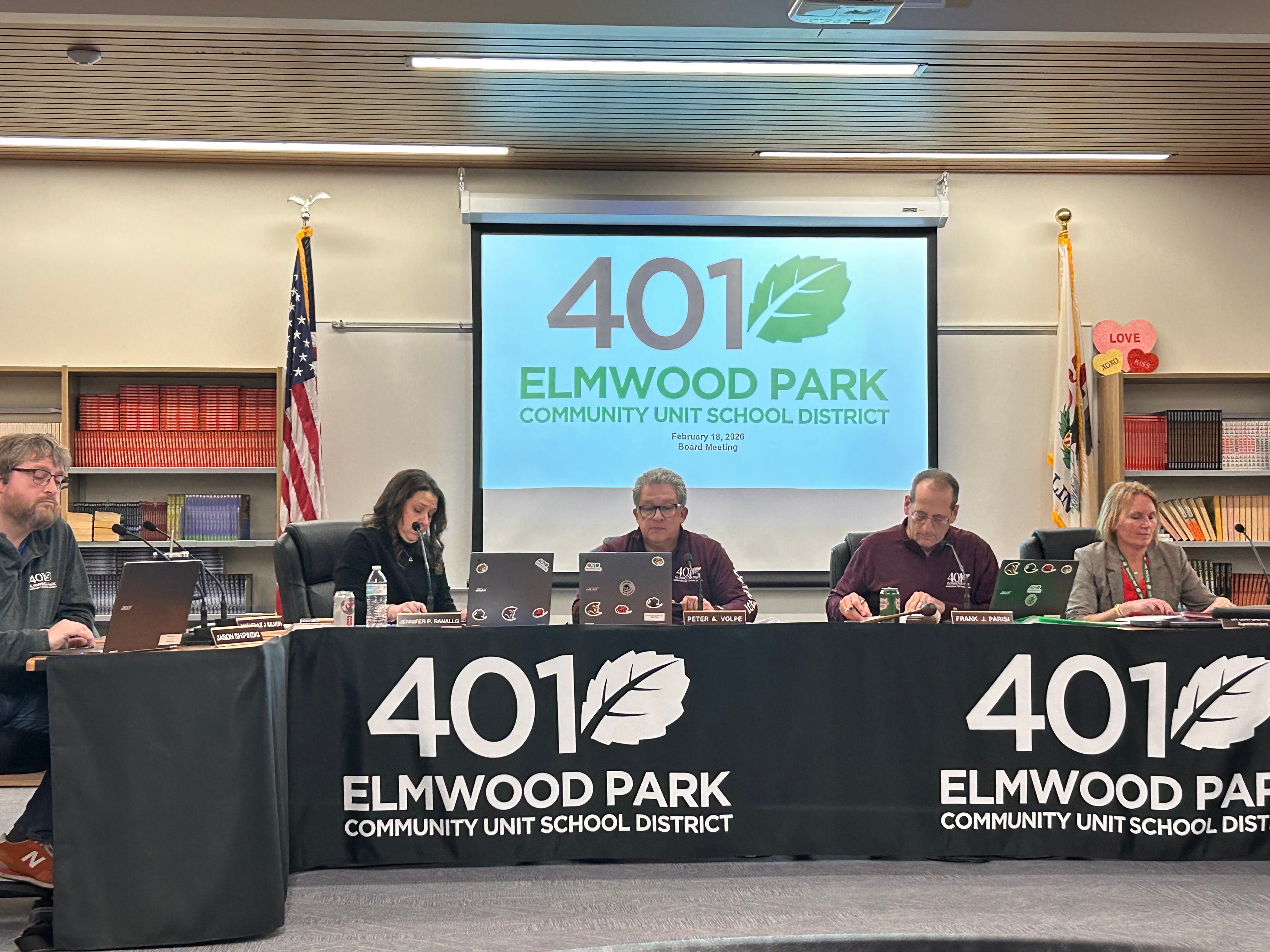
School board members finally discussed a request from several Elmwood Park High School students to establish two non-voting student positions on the board. However, board members seemed unwilling to adopt the proposal.
On March 4, during a Committee of the Whole (COW) meeting at John Mills Elementary School, student representation was included on the agenda and board members shared their perspectives.
“We have many platforms currently in place where we have student participation or input,” Board President Frank Parisi declared, pointing to existing opportunities for students to share feedback through administrators, surveys, and student leadership groups.
Parisi commented, “This isn’t the first time it’s been brought up. It’s been brought up before.” He also maintained that “the same questions came up before.”
On the other hand, Board Secretary Jennifer Ranallo recognized that the board could benefit from hearing more directly from students.
“The most important piece is board engagement with the student population,” Ranallo said, noting that the district serves roughly 2,800 students.
Board member Jason Shipinski said, “I just don’t see what voice could be brought here that would be any different than speaking during public comment, coming to meetings, or being on a committee. I don’t know what changes.”
The students that addressed the board previously emphasized how additional student voices could play a “crucial role.”
“For example, during the [September] board meeting, students could have offered valuable insights about the differences between AP and Honors classes, which would have helped the conversation about their importance in the district,” the students said during public comment at an October board meeting.
The student also suggested that “student perspectives could help guide decisions regarding days off around AP tests, school events, and when students could benefit most from days off and breaks.”
Emails obtained through the Freedom of Information Act show that the students spent months begging the board members to address their request. Instead, Parisi and Superintendent Dr. Leah Gauthier kept reminding them that they could raise the issue during public comment at board meetings, which they had done.
The students addressed members during board meetings in October and November of last year. Twice the students asked the board to discuss student representation at a COW meeting, but the board ignored the students. (Note: COW meetings are when board members typically engage in informal discussions prior to any particular action.)
Community member and district parent Chris Doyle raised the matter at a regular board meeting in February. Standing up for the students (two of which are his children), Doyle recalled that it had been “20 weeks since this was first presented to the board.”
“Do you realize that through your actions and inaction that you have marginalized these EPHS students?” Doyle asked, calling on the board to apologize to the students.
Much of the conversation at the meeting on March 4 focused on the idea that it would be too difficult, since the school board is responsible for a unit district that manages elementaries, a junior high, and a high school.
“We have to answer to all of the kids in the district and their learning abilities,” Ranallo argued. “Is someone going and speaking on behalf of all of our special needs students that we have here?”
Shipinski continued, “As you get into the lower grade levels, you know their interests are going to be different. It’ll be about recess and lunch. That doesn’t mean they still shouldn’t be heard. They may want to change the playground.”
A guide from the Illinois Association of School Boards (IASB), which was given to the board by the students, outlines [PDF] the process. School boards in Illinois may appoint student representatives to serve in an advisory capacity, and student representatives may attend open meetings and participate in discussions. But the students are not allowed to vote nor are they permitted to attend closed session meetings, where confidential matters are discussed.
“Consider having a minimum of two student board representatives. This will avoid tokenism, increase diversity of thought, and make it easier for youth to participate,” the IASB recommends.
Still, board members expressed reservations about the fact that the students occupying this board position would likely be class presidents or honors students, as if they would not be able to appropriately represent their peers.
The discussion eventually shifted to the possibility of establishing a student advisory group, such as a committee made up of students from different grades, activities, and backgrounds. Specifically, Ranallo mentioned the parent advisory committee with parents of students of all different ages— “girls, boys, athletes, scholars, non-athletes”—as something that could be duplicated.
By the end of the discussion, board members agreed that further consideration and planning was necessary before moving forward with anything formal.
It's a interesting thought but unless those reps are voted on by the students of each of the schools it should be a none starter. And I would say that every school should have a rep if you're going to do it fairly. It's not a bad idea just seems like adding non-voting voices to the situation it's just going to bog it down like a committing in an office does when you're trying to get a task done.
I can also see the question of what is the point. If they're not voting what are they really doing besides what they're already doing in public comment or through submissions to the school board via other routes?
So what would be the major difference if they were sitting there and not just speaking during public comment. If they're already being ignored as you say by the school board what's to make them not be ignored when they're sitting at a chair up there?